HOME


andy warhol

damien hirst

gisela colón

jaehyo lee

james verbicky

jean-michel basquiat

joan miro

jylian gustlin

karim ghidinelli

lori cozen-geller

luc leestemaker

maggie hasbrouck

marc chagall

matt devine

michael kalish

michael kessler

michael shemchuk

miya ando

monika steiner

pablo picasso

richard erdman

richard roblin

roy lichtenstein

rufino tamayo

valerie daval


GISELA COLÓN

REVIEW BY PETER FRANK, Los Angeles 2008

Artistic “originality” is not only the result of innovation – if it results from innovation at all. The features that distinguish an oeuvre normally result not from doing something nobody else has ever done, but from doing what so many other artists have done – and bringing together what they have done in an entirely unanticipated manner. Originality is the marriage of personal insight to stylistic synthesis, artistic DNA inherited and recombined through a combination of vision, skill, good fortune and will. An “original” body of work is far more than the sum of its parts – even as it has many parts.

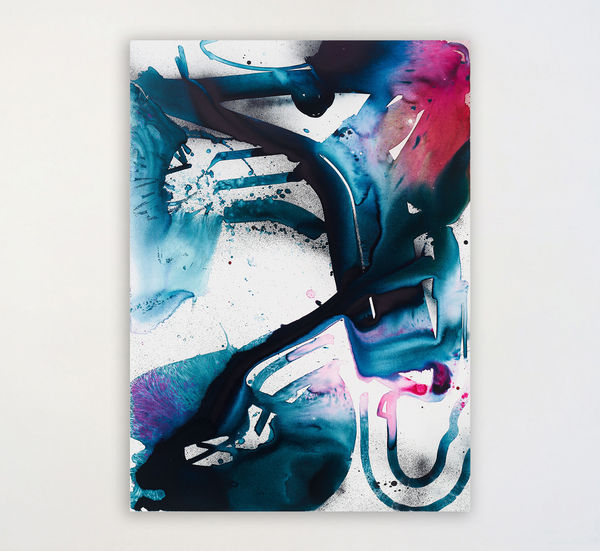
In this light the art of Gisela Colón manifests an especially curious and telling hybrid. The work of a painter born in Canada, raised in Puerto Rico, and resident in Los Angeles for the latter half of her life, Colón draws upon her Latin roots, her California environment, and her awareness of European and American – South and North American – artistic forerunners to forge an emphatically distinctive style, one that evinces its heritage in all of these sources but provides a whole other visual experience. The paintings Colón has produced over the last several years have culminated in a body of work that betrays myriad artistic sources and models and yet can be mistaken for none of them, even as it can compare with the best of them. Colón herself admits to, even speaks excitedly about, those sources, referring to them as examples to which she has striven, distant masters to whom she has apprenticed in her own studio. Painting for Colón is, among other things, a form of ancestor worship. But she honors her artistic predecessors, and her cultural roots, not through imitation, but through conflation, through the bringing together of the spirits she has found and that have found her.

Colón identifies most strongly with the art and architecture of mid-20th-century Western civilization, and her works evinces a dialectical resolution of the forces that determined in particular the abstract painting of that era. Colón’s painting embraces and elides the disparity between geometric and gestural abstraction, fusing the spirit and texture of one with the line and composition of the other to achieve an ordered sensuality, a passion whose allure is heightened by its rhythmic precision. Another dialectic that reaches synthesis in Colón’s work is that opposing “northern” culture with “southern,” that is, the heretofore dominant culture(s) of Europe with the once subjected culture(s) of sub-equatorial peoples, specifically in her case those of Latin America. Indeed, the art of Latin America in modern times, from Rivera to Torres-Garcia, can itself be measured in attempts to resolve this dichotomy, to harness the twin engines of colonial and colonized peoples to a single aesthetic, if not ethos; and Colón must be seen as a natural inheritor of artists as diverse as Wifredo Lam, Gunther Gerszo, Jesus Raphael Soto, Rufino Tamayo, and the Madí artists of postwar Argentina. 

The artists cited here are all associated with abstract tendencies, from cubism to Op art. Even the most figural (Tamayo, Lam) rely on stylization, formalized line, and a dynamic palette at least as much as on imagery per se. Colón, quite consciously, associates with and studies abstraction – with a particular emphasis on geometric formal languages. The painterliness of Colón’s work would seem to bespeak a connection to more gestural styles – abstract expressionism, tachisme – but in fact even a cursory examination of her work reveals a powerful, and basic, sense of structure. Her art, by her own admission, is “earthy and sensual,” but is also rigorous and ordered – a dialectical distinction that she proudly identifies as distinctive to Latin American art, and also finds in the work of certain mid-century Euro-American painters, artists such as Mark Rothko in New York and Maria Helena Vieira da Silva in Paris who merged the Apollonian and Dionysian impulses in their own syntheses.

For the last several years, Colón has consistently employed a particular armature as the fundament of her painting. She refers to it as a “grid,” and its basic unit is indeed a more or less rectangular form repeated across the expanse of the painting. But this is not the precisely inscribed box upon which the minimalists of the 1960s (whom Colón also admires) built their edifices. Its effect is similar, at once inviting almost mantric contemplation and proposing an architectural comprehension of form. But compared to the uninflected, self-effacing alignments of Agnes Martin or Carl Andre, Colón’s grids are irregular, brittle, almost organic. They pile on one another like paving stones, even oozing “mortar” where their rough edges meet. (That binding material is itself raw and lustrous, as if Colón were affixing her bricks to one another with molten gold.) They are invariably luminous, whether mashed coarsely to the supporting surface, as in the earlier work in this extended series, or sealed beneath a glistening skin of resin, as in the more recent paintings.


© 2007 - 2012 Madison Gallery Inc. All Rights Reserved.